

Home / Blog / Kite Festival
Kite Festival
Celebrate Every Festival In India by Flying Kites!
Explore India's biggest kite festivals by state, season, and scale. FLY360 covers Uttarayan, Jaipur, and beyond with expert aerial event insights and booking options.
Kite Festival in India: The Complete State-by-State Guide
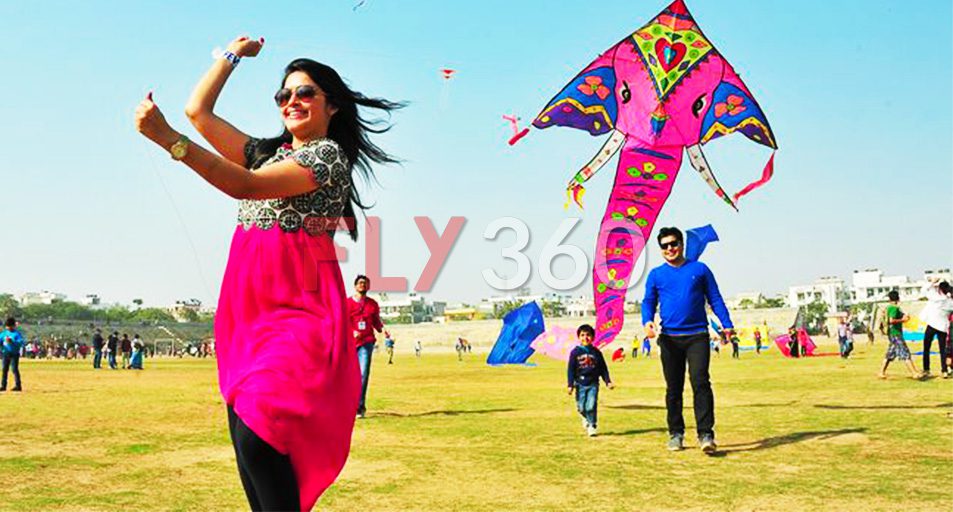
India does not have one kite festival. It has dozens, spread across nearly every state, season, and cultural tradition the country holds. The sky above an Indian city on the right day in January looks like a completely different atmosphere: dense, saturated, loud with the sound of snapping lines and the crowd’s reaction when a rival kite is cut.
At FLY360, we have participated in, engineered for, and delivered aerial spectacles at kite festivals across India and internationally for over two decades. We have flown at the Gujarat International Kite Festival in front of the Prime Minister of India, produced multi-kite train formations covering 1.2 kilometres for national brand campaigns, and conducted kite-making workshops for 1,017 participants in a single sitting. The kite festival circuit in India is not background context for us. It is our primary operational arena.
This guide covers the major kite festivals across India by state and season, what makes each one distinct, and how to engage with them whether you are an individual enthusiast, a brand looking for aerial visibility, or an event organiser planning a large-scale aerial activation.
Why India Is the Global Capital of Kite Culture
The density and geographic spread of kite festivals in India has no parallel anywhere else in the world. While countries like China, Afghanistan, Malaysia, and Turkey each have significant kite traditions, none of them embed kite flying into as many distinct religious, seasonal, and civic calendars simultaneously as India does.
The practice is oldest and most formally codified in Gujarat and Rajasthan, where entire urban neighbourhoods participate in rooftop kite battles during Uttarayan. But the tradition extends east into West Bengal, north into Punjab and Himachal Pradesh, south into Tamil Nadu and Karnataka, and outward into state-sponsored international festivals that draw participants from over 40 countries in a single edition.
This is also why FLY360 operates from Vapi, Gujarat. The industrial corridor between Mumbai and Ahmedabad sits at the geographic heart of India’s kite manufacturing and kite culture ecosystem. Our kites have been produced here and flown on four continents. The knowledge base is local. The reach is global.
Uttarayan: The Makar Sankranti Kite Festival of Gujarat
If there is one kite festival that defines India’s global kite reputation, it is Uttarayan, celebrated on 14th and 15th January to mark the solar transition of Makar Sankranti.
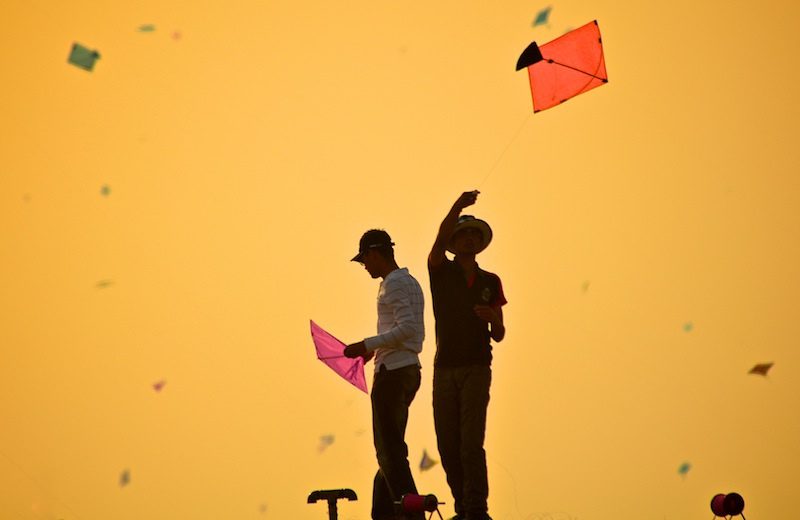
In Gujarat, and particularly in Ahmedabad, Surat, Vadodara, and Vapi, Uttarayan is not a ticketed event. It is a city-wide, rooftop-to-rooftop aerial battle that begins before sunrise and continues after dark. Virtually every household participates. The sky fills to a density that is difficult to describe without having seen it: thousands of diamond kites simultaneously airborne over a single urban neighbourhood, with kite lines crossing at altitude and competitors attempting to cut each other’s string using abrasive manja line.
The Gujarat International Kite Festival, held annually in Ahmedabad in January, runs alongside Uttarayan and draws professional kite artists and display teams from across the world. It was at this festival that FLY360 director Nisarg Shah was awarded First Prize by Prime Minister Narendra Modi for engineering and flying a fully functional, aerodynamically stable kite measuring just 1.5 inches in total span. That performance was not a novelty act. It was the result of precise material selection, frame geometry calibration, and bridle setup at a scale where the margin for error is measured in millimetres.
For brands and event organizers, Uttarayan and the Gujarat International Kite Festival represent one of the highest-density outdoor audiences in the country during a single concentrated period. FLY360’s aerial branding and event services are specifically structured to capture this window with sky-bound activations that bypass ground-level media saturation entirely.
Jaipur Kite Festival: Rajasthan’s Sky Rivalry
Rajasthan has its own deep kite culture, rooted in both Makar Sankranti celebrations and the Jaipur International Kite Festival. Jaipur’s old city architecture, with its flat terraces and open havelis, creates an environment similar to Ahmedabad’s rooftop battle culture.
The Rajasthan International Folk Festival and state government initiatives have increasingly incorporated competitive kite flying into Jaipur’s cultural tourism calendar, positioning the city as a second major hub on the national kite festival circuit. Traditional Rajasthani kite designs differ from Gujarati diamond kites in their decorative patterning and occasionally in their frame geometry, reflecting regional craft traditions that have evolved independently across centuries.
FLY360 has delivered aerial display operations across Rajasthan as part of multi-city campaign deployments. Our portfolio of past activations covers both state-level institutional commissions and private brand campaigns in the Rajasthan market.
Makar Sankranti Kite Flying Across India: State by State
While Gujarat dominates the kite festival calendar, Makar Sankranti on 14th January triggers kite flying traditions across multiple states simultaneously.
Maharashtra: Mumbai, Pune, and Nashik see significant rooftop kite flying, with a culture that blends Gujarati diamond kite traditions with locally preferred string types. The city’s high-density neighbourhoods create compact aerial battlegrounds above chawls and residential terraces.
Telangana and Andhra Pradesh: Sankranti in Telangana and Andhra Pradesh is one of the most significant festivals of the year and includes kite flying as a core activity, particularly among younger participants in urban areas. Hyderabad sees concentrated kite activity across its older city quarters.
Tamil Nadu: Pongal, the Tamil harvest festival coinciding with Makar Sankranti, includes kite flying traditions in coastal districts. The sea breeze conditions along the Tamil Nadu coast produce reliably strong and consistent winds, making them aerodynamically ideal for extended high-altitude flight.
Punjab and Haryana: Basant Panchami in Punjab and Haryana historically triggered one of the most celebrated kite flying seasons in North India, with participants dressed in yellow and kite battles filling the sky. While regulatory changes around manja have modified the practice in some areas, rooftop kite culture remains active in Amritsar, Ludhiana, and Chandigarh.
West Bengal: Viswakarma Puja in September is the primary kite flying occasion in West Bengal, particularly in Kolkata, where the tradition is closely tied to the artisan and craft community. The timing differs entirely from the January calendar, making it a distinct seasonal activation window.
Himachal Pradesh: The Kullu Dussehra festival incorporates kite flying into its celebrations, and the mountain valley geography of Himachal Pradesh produces distinctive wind conditions that require specific kite configurations different from those used on the plains.
For a full picture of how FLY360 structures multi-city deployments across these festival windows, visit our events and aerial operations page.
International Kite Festivals Hosted in India
Beyond state-level celebrations, India hosts several formally structured international kite festivals that bring professional kite teams from across the world to compete and display.
Gujarat International Kite Festival, Ahmedabad: Held annually in January, this is India’s flagship international kite event, organized by the Government of Gujarat. It draws participants from over 40 countries and includes competitive categories, giant display kites, fighter kite battles, and choreographed multi-kite formations. FLY360 has competed and displayed at this festival at the highest level.
Ahmedabad Kite Festival (Patang Mahotsav): Run in conjunction with Uttarayan, this festival has grown into a major cultural tourism anchor for the city, attracting national and international media coverage during the January window.
Pushkar Kite Festival, Rajasthan: Held during the Pushkar Fair in November, this festival integrates kite displays into one of India’s most internationally recognized cultural tourism events.
Dwarka Kite Festival, Gujarat: Held at the sacred coastal site of Dwarka, this festival combines religious significance with competitive kite flying along the Arabian Sea coastline, where onshore wind conditions are strong and consistent across the January period.
Chennai Kite Festival: Organized periodically along the Marina Beach seafront, this event leverages the consistent coastal winds of the Bay of Bengal for high-altitude display flying, with participation from national and international kite artists.
Our commercial kite manufacturing capabilities are directly informed by the technical requirements of competing and displaying at events like these, where wind conditions, spectator visibility requirements, and airspace constraints vary significantly between venues.
What Separates a Display Kite from a Fighter Kite
Most people who attend Indian kite festivals encounter two fundamentally different types of kiting happening simultaneously in the same sky, and the distinction matters for anyone planning an event activation.
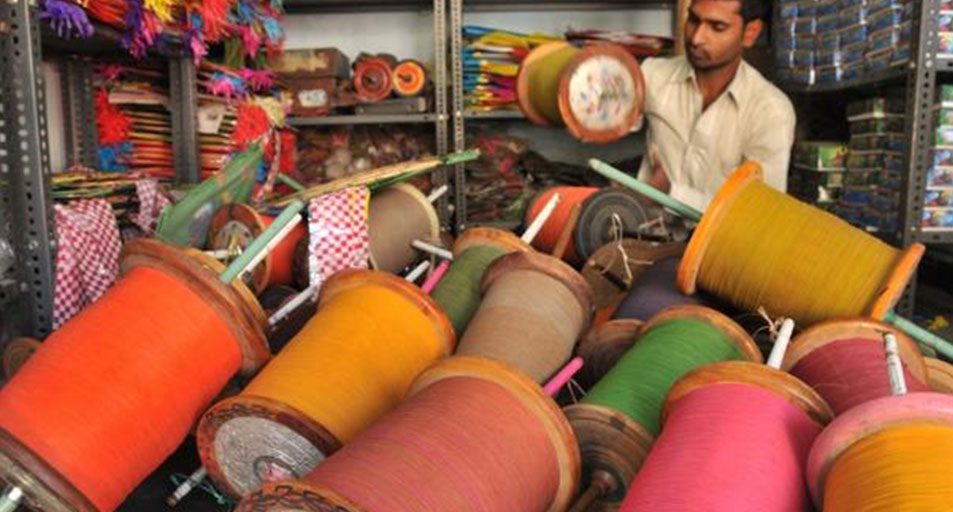
Fighter kites are the small, highly maneuverable diamond kites used in the rooftop battles central to Uttarayan and Basant. They are typically made from thin tissue paper and light bamboo, and are designed to be cut-resistant and highly responsive to subtle line tension changes. The manja (abrasive-coated line) used in fighter kite battles requires careful handling and is subject to regulatory restrictions in several Indian states.
Display kites are purpose-built for visual impact, stability, and altitude. A FLY360 display kite for a festival or brand activation is a structurally engineered product: industrial ripstop nylon sail, high-tension fiberglass or carbon fiber spars, AutoCAD-designed connector joints 3D-printed in ASA or Nylon filament on our in-house industrial printers, and a bridle configuration calculated for the specific wind speed range of the deployment location.
The scale difference is substantial. Our large-format delta structures reach 12 feet by 12 feet. Our multi-kite train formations cover over a kilometre of continuous line. These are not festival novelties. They are aerial engineering deployments.
To understand the full production specification behind a FLY360 display kite, visit our commercial kite manufacturing page.
Kite Safety at Indian Festivals: What Every Participant Should Know
The joy of kite festival participation in India is real and the culture is irreplaceable. So is the responsibility that comes with flying in shared airspace above populated areas.
Manja regulations: Several Indian states have issued regulations or outright bans on synthetic or glass-coated manja due to the documented injuries caused to motorcyclists, birds, and pedestrians. Always verify the current local regulations before purchasing or using any abrasive kite line. Cotton manja remains permitted in most areas.
Airspace awareness: Large kites, particularly those flown at altitude with significant line length, can present hazards to low-flying aircraft in areas near airports and helipads. The Directorate General of Civil Aviation (DGCA) guidelines specify altitude and proximity restrictions for tethered objects. FLY360 handles all pre-event airspace filings and compliance notifications as a standard part of our turnkey event delivery.
Roof and terrace safety: Rooftop kite flying is a defining element of Uttarayan culture in Gujarat. It also carries real fall risks, particularly for children. Secure rooftop barriers and adult supervision are essential for any terrace flying session.
Line retrieval: After a kite is cut or the flying session ends, loose kite line across streets, trees, and power infrastructure is a genuine hazard. Responsible retrieval after every session is both a civic and a safety obligation.
For event-scale safety protocols and airspace compliance management, our event planning and logistics page covers the full FLY360 compliance process in detail.
Planning a Branded Kite Activation at an Indian Festival
Kite festivals represent a high-density, high-engagement outdoor audience with strong local media and social media attention concentrated in a short, predictable window. For brands and event organizers, this is a structurally underutilized activation platform.
A FLY360 branded activation at a kite festival typically involves one or more of the following components:
Large-format custom-branded delta or diamond kites carrying logo, colour scheme, and messaging visible from several hundred metres. Multi-kite train formations in brand colours that sustain visibility across the full event duration. Night LED activations that extend the brand presence into the evening sessions, when crowd density and social media capture rates are highest. On-ground kite-making workshops that place the brand directly in participants’ hands during a structured, facilitated experience.
The production timeline for a festival activation brief starts at 6 weeks for standard configurations and extends to 12 weeks or more for fully custom structures. Our client project pipeline is managed through HubSpot CRM, which gives every client real-time visibility into fabrication milestones, delivery logistics, and event-day operational planning.
To initiate a conversation about a festival activation, visit our contact and event enquiry page or review our portfolio of brand activations and institutional events to see the scale we have executed across India and internationally.
How to Make the Most of Your First Kite Festival Experience
If you are attending an Indian kite festival for the first time as a participant rather than as a professional team, a few structural observations will help you engage with it more fully.
Arrive before sunrise at Uttarayan. The first hour of light on 14th January in Ahmedabad, when the sky transitions from empty to saturated with kites in under thirty minutes as every household simultaneously launches, is one of the most visually extraordinary things you can witness at any festival in India.
Learn the basic line tension signals that fighter kite fliers use before you enter a contested airspace above a rooftop. Watching an experienced flier handle manja during a cut attempt is itself worth the visit.
If you want to understand kite construction before or after the festival, our step-by-step homemade kite making guidewalks through the aerodynamic principles and material choices that determine how a kite performs. The physics governing a 30 cm tissue diamond above a Surat rooftop and a 12-foot branded delta above a festival ground in Ahmedabad are identical. Scale changes. Principles do not.
Frequently Asked Questions: Kite Festival in India
When is the main kite festival in India? The largest and most widely observed kite festival period in India is Makar Sankranti, falling on 14th January each year. In Gujarat, this is celebrated as Uttarayan and involves city-wide kite flying across two full days. The Gujarat International Kite Festival in Ahmedabad runs in parallel and draws international participants.
Which state is most famous for kite festivals in India? Gujarat is India’s most famous kite festival state, with Uttarayan in Ahmedabad being the country’s largest single kite flying event. Rajasthan is the second major hub, with Jaipur hosting significant festival activity. West Bengal, Punjab, and Telangana each have distinct regional kite traditions tied to separate seasonal calendars.
What is the name of the kite festival in Gujarat? The popular celebration is called Uttarayan, observed on Makar Sankranti on 14th January. The formally organized state government event running alongside it is the Gujarat International Kite Festival, also known as Patang Mahotsav, held annually in Ahmedabad.
Is the kite festival only in January in India? No. While January is the highest-density kite festival month due to Makar Sankranti and Uttarayan, other major kite traditions occur throughout the year. West Bengal’s Viswakarma Puja kite flying is in September. Basant Panchami kite flying in Punjab and Haryana falls in January or February. Pushkar Kite Festival in Rajasthan is in November.
Can FLY360 provide kite displays for a festival or public event? Yes. FLY360 delivers full turnkey aerial activations for festivals, brand events, state institutions, and civic campaigns. This includes custom kite fabrication, multi-kite formation flying, night LED displays, and on-ground kite-making workshops. Visit our events and aerial branding page to initiate a brief.
Where can I buy quality kites for an Indian festival? The FLY360 online store stocks commercially manufactured kites across multiple formats and size categories, from beginner diamond kites to large-format display structures. Visit our kite store to see the current range.
What is manja and is it safe to use? Manja is the abrasive-coated kite line traditionally used in Indian fighter kite competitions. Synthetic manja made from nylon or glass coatings has been banned or restricted in several Indian states due to safety concerns. Cotton manja remains permitted in most areas. Always check current local regulations before purchasing any type of abrasive line.
The Sky Has Always Been India’s Festival Ground
Every culture that has ever flown a kite understood, at some level, that the sky is the one shared space that no boundary can divide. In India, that understanding became a festival. Then it became a hundred festivals, each with its own season, its own regional character, and its own technical tradition.
FLY360 works inside all of them. From the 1.5-inch ultra-miniature kite that won First Prize at the Gujarat International Kite Festival in front of the Prime Minister, to the 1,150-kite formation that set a Limca Book of Records across 1.2 kilometres of continuous line, to the custom aerospace-themed designs that earned a signed Letter of Appreciation from President Dr. A.P.J. Abdul Kalam: every project is grounded in the same principle.
Precision engineering enables reliable, repeatable awe.
Explore FLY360’s full range of festival, event, and branding services and let us build the aerial layer your next activation deserves.
FLY360 is India’s leading commercial kite brand and aerial experiential agency, operating from Vapi, Gujarat. We have produced over 1,00,000 custom-engineered kites, delivered 700+ large-scale aerial events across 4 continents, and served 500+ enterprise corporate clients. Our work is held in permanent collections at the World Kite Museums in Washington D.C. and Istanbul.