


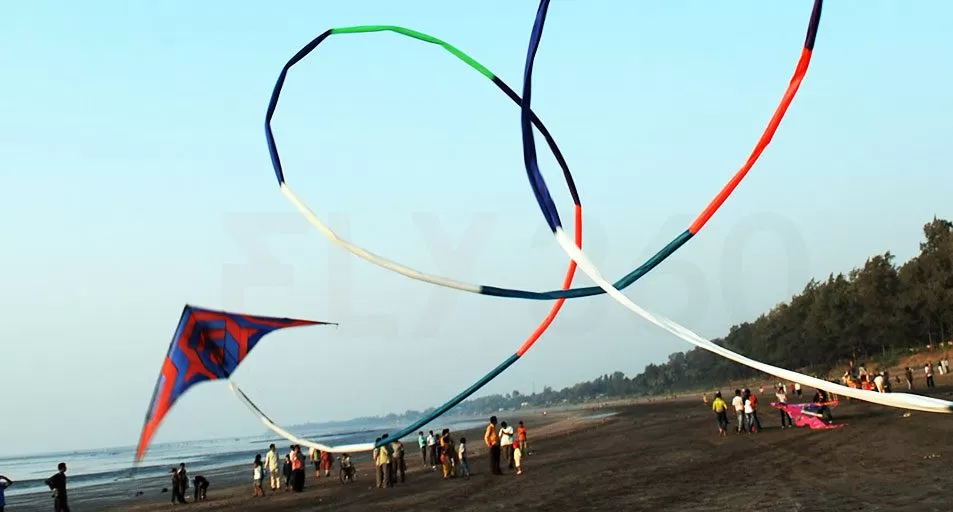
Why Kites Need a Tail: The Aerodynamics and Science Behind Kite Stability
Why do kites need tails? Understand the aerodynamics of kite stability, drag and balance, plus how to size a kite tail correctly – explained by FLY360.
Every kite flyer has experienced it: the kite launches, rises 20 feet, then starts spinning, diving, or looping uncontrollably until it crashes. The problem is almost always the tail. Understanding why kites need a tail is the difference between a kite that soars beautifully and one that performs an unplanned death spiral. Fly360’s kite engineering team explains the aerodynamic science behind kite tails in this complete guide.
What Does a Kite Tail Actually Do? The Aerodynamic Function
A kite tail serves one primary aerodynamic function: it creates drag at the lower end of the kite. This drag has two effects. First, it pulls the bottom of the kite downward, establishing a consistent orientation relative to the wind. Second, it dampens oscillation – the side-to-side or rotational movement that causes a kite to spin or cartwheel.
Without a tail, a kite that catches a gust on one side will rotate around its tether point, diving toward the ground. The tail’s drag acts as a restoring force, pulling the kite back to its correct flight angle after each disturbance. The heavier and longer the tail, the stronger this restoring effect – but too much tail weight reduces the kite’s ability to climb.
How to Know If Your Kite Needs a Tail
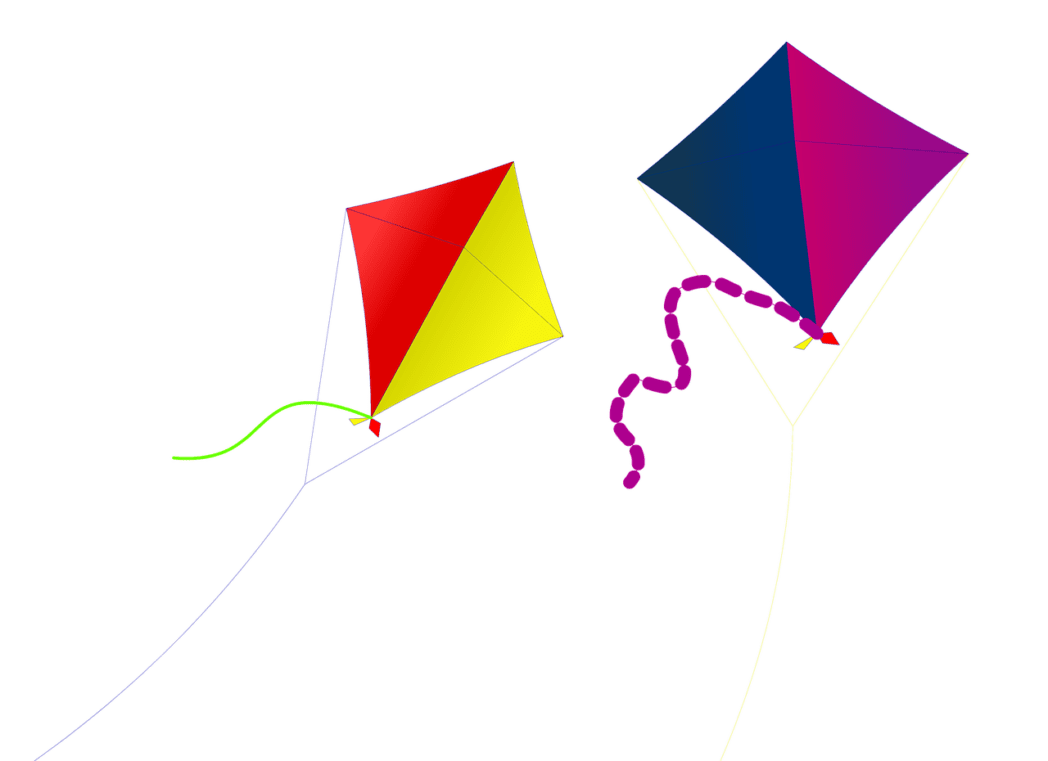
Not all kites require a tail. Box kites, delta kites with dual-line control, and modern stunt kites are designed to be inherently stable without tails. But single-line diamond kites, traditional Indian patang kites, and flat kites almost always need one.
Test your kite by flying it without a tail in light wind (5 to 10 kmph). If it flies stably, a tail may not be needed. If it wobbles, spins, or dives, add a tail starting at 3 to 4 times the kite’s height. In stronger winds, extend the tail further. The goal is the shortest tail that produces stable flight in the current conditions.
Types of Kite Tails and When to Use Each
There are three main types of kite tail used in professional kite flying:
Straight Tails
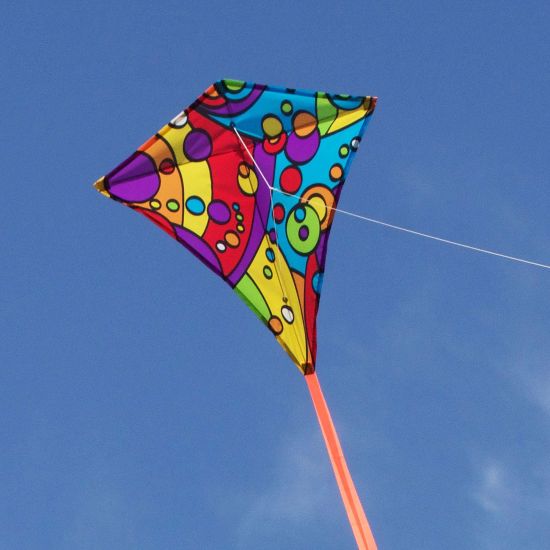
The most common type. A long ribbon of fabric attached to the bottom or lower corners of the kite. Simple to make, easy to adjust, and effective in most conditions. Most traditional patang kites use straight tails made from strips of paper or plastic.
Spinners
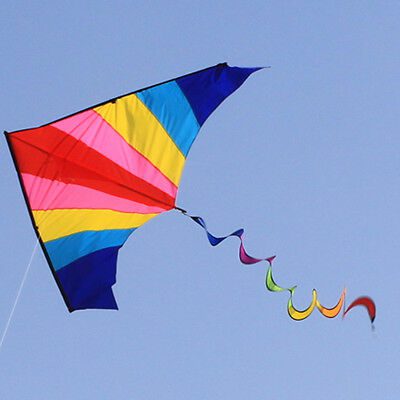
Spiral or twisted tails that rotate as they trail through the air. Spinners generate more drag per unit length than straight tails and add visual appeal. Fly360 uses spinner tails for display kites at festivals where visual impact is as important as stability.
Wind Socks
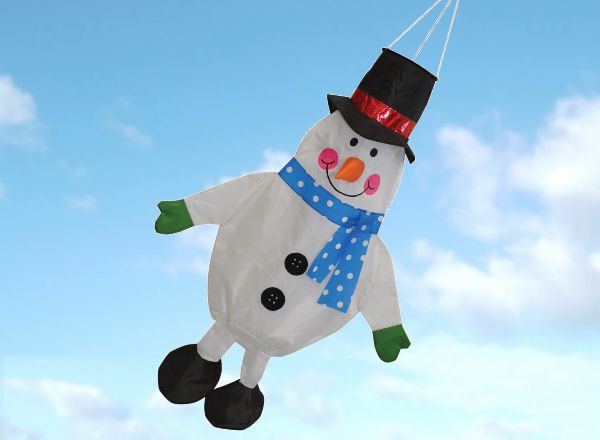
Cylindrical tails open at both ends that allow air to flow through. They generate consistent drag regardless of the kite’s orientation and are popular for large display kites where stability in variable winds is critical.
Tail Positioning and Length: Getting the Balance Right
Where you attach the tail matters as much as the tail itself. The tail should be attached at the bottom center of the kite for symmetric drag. Attaching it off-center will cause the kite to pull to one side.
As a starting rule: begin with a tail 3 to 4 times the height of the kite. For a 60 cm kite, start with a 180 to 240 cm tail. Adjust from there – if the kite still wobbles, add length. If it flies flat and refuses to climb, shorten it. In gusty winds, a longer tail helps absorb sudden gusts. In light winds, a shorter tail maximises lift.
Frequently Asked Questions: Why Do Kites Need a Tail?
Common questions answered by the Fly360 team.
Why do kites spin without a tail?
How long should a kite tail be?
Do all kites need a tail?
What material should a kite tail be made of?
Can I make a kite tail at home?
Want to Learn More About Kite Aerodynamics?
Fly360 runs hands-on kite making workshops across India where the science of flight is explained through building and flying.