

Home / Blog / Kite Festival
Kite Festival
Vokatta! Where our spirits soar as high as the kites we fly!
Fly360 takes its designer kites to Kolkata, Bengal's vibrant kite culture. Discover how the Vokatta festival celebrates kite flying and community spirit in Eastern India.
Every January, the sky above Kolkata turns into a battlefield of colour, string, and competitive spirit. Vokatta — from the triumphant cry “Woh Katta!” (He cut it!) — is Eastern India’s largest kite festival. This is how a city’s centuries-old obsession with kites became a world-class aerial celebration, and how Fly360 became part of that sky.
Kolkata and Kites: A Bond Since the Mughal Era
Kite flying in Kolkata dates to the Mughal period, when the sport became aristocratic entertainment that filtered into every neighbourhood. On Makar Sankranti and Vishwakarma Puja, the city skies filled with Chowringhee (four-coloured) and Petkatta (two-coloured) kites fighting with glass-coated manja. Children and adults flew past sunset, watching colours collide against a crimson sky. This was not merely sport — it was a language of pride, community, and identity.
What is Vokatta? The Festival That Revived Kite Fighting
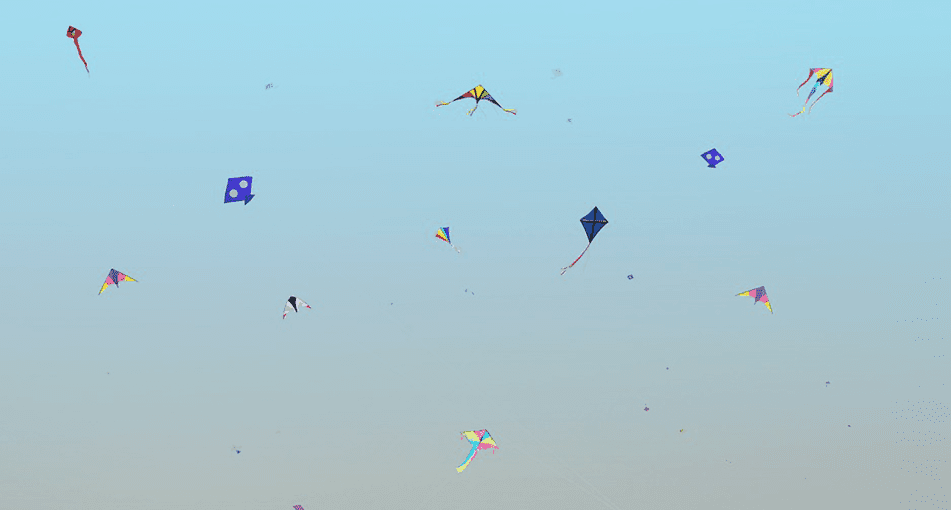
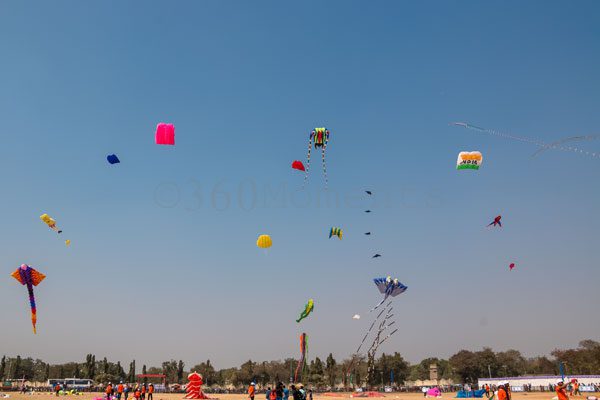
Vokatta — derived from the battle cry meaning “He cut it!” — is Kolkata’s international kite festival, launched in 2013 to formalise the city’s kite heritage on a global stage. Every year, flyers from across India and the world converge for competitive flying, live music, amusement rides, and LED night kite shows. Kites of every conceivable shape — cartoon characters, geometric patterns, massive inflatable figures — fill the sky in an unbroken canvas of motion.
Fly360 at Vokatta: Engineering Spectacle from the Ground Up
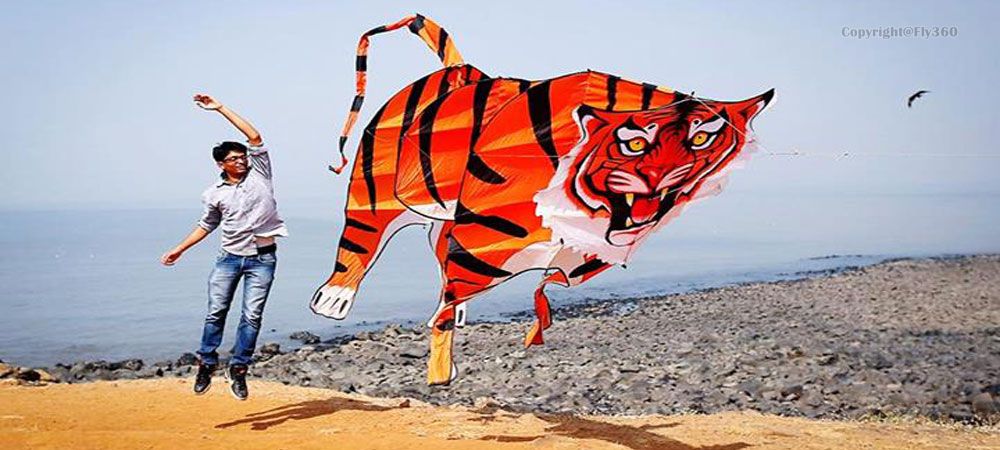
Fly360, led by master kite designer and Limca Book of Records holder Nisarg Shah, brings full engineering capability to festivals like Vokatta. Where most festivals feature standard patangs, Fly360 fields custom-built delta structures, 3D inflatable animals, 100-kite train formations, and LED night-flying rigs. With 700+ events across 4 continents, the team knows exactly how to read wind conditions, manage flight logistics, and build spectacle at scale that generates lasting crowd memory.
Flying Responsibly: Protecting Birds and the Tradition
Kite flying carries a responsibility. Glass-coated manja and cheap plastic kites injure thousands of birds across Indian cities each year. Fly360 advocates for nylon string and biodegradable ripstop nylon kite fabric — materials that deliver superior performance with dramatically reduced environmental harm. Vokatta now actively encourages the shift away from harmful materials, ensuring the tradition survives without the ecological cost that has threatened its reputation.
Frequently Asked Questions
What is Vokatta kite festival?Vokatta is Kolkata's international kite festival, launched in 2013. The name comes from "Woh Katta!" — the traditional shout when a kite line is cut. It features competitive flying, LED night shows, and kites from India and worldwide.When does the Kolkata kite festival take place?Vokatta and most Kolkata kite events are held around Makar Sankranti (mid-January) and Vishwakarma Puja (mid-September), when wind conditions in the city are ideal.Can Fly360 organise a kite festival for my city?Yes. Fly360 manages complete kite festivals end-to-end — from custom kite fabrication and wind analysis to safety management and post-event content. Contact Fly360 to discuss your requirements.What kites does Fly360 bring to festivals?Fly360 brings custom-engineered kites including 100-kite train formations, 3D inflatable aerial sculptures, LED night-flying rigs, and large delta structures — far beyond standard patangs.Is manja banned at kite festivals?Glass-coated manja is banned in many Indian states due to injuries to birds and people. Fly360 uses and recommends nylon string and eco-friendly kite materials for all its events.