



Kite Info
Scientific Discoveries Using Kites: How a Simple Object Changed the World
From Benjamin Franklin's lightning experiment to weather research – how kites changed science. FLY360 traces history's greatest kite-powered discoveries.
When was the last time a toy changed the course of human history? Kites did it at least four times. From Benjamin Franklin proving that lightning is electricity, to the Wright Brothers using a kite to crack the code of powered flight, the story of scientific discovery is intertwined with the story of kite flying in ways most people never learn about. Fly360, India’s leading professional kite company founded by master kite artist Nisarg Shah, explores the extraordinary scientific legacy of this ancient flying object.
200 BC
Kites first invented in China
1752
Franklin’s kite electricity experiment
1900
Wright Brothers kite experiments
Today
KiteGen energy research continues
Benjamin Franklin and the Kite That Proved Lightning Is Electricity
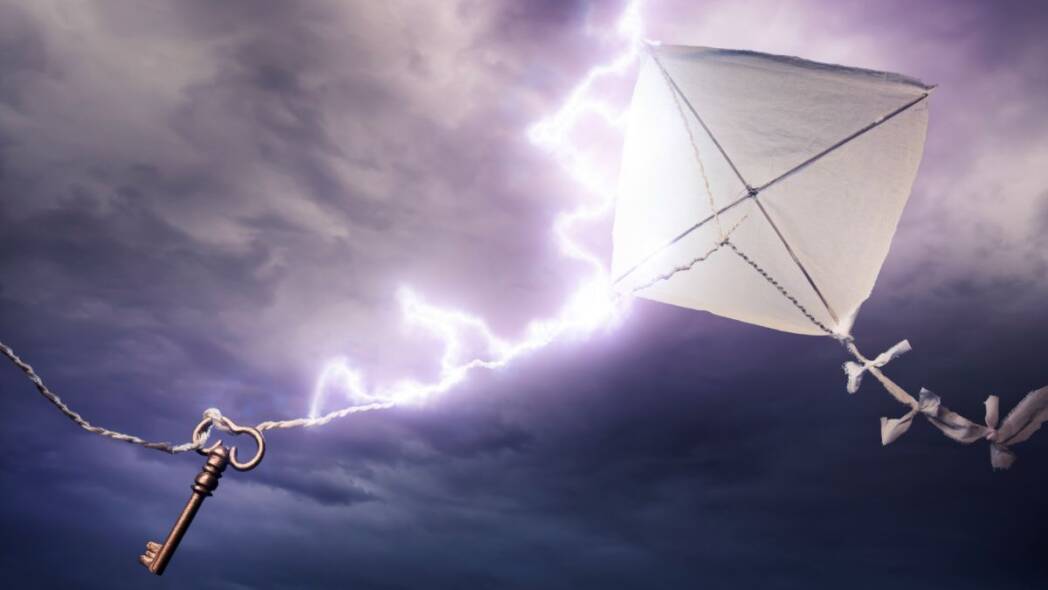
In June 1752, Benjamin Franklin conducted one of the most famous experiments in the history of science – using a kite. His goal was not to discover electricity, which was already known, but to prove that lightning was an electrical discharge. On a stormy afternoon in Philadelphia, Franklin flew a silk kite fitted with a metal key and a Leyden jar (a device for storing electrical charge). When lightning struck near the kite, electrical charge traveled down the wet hemp string to the key, then into the Leyden jar, proving his hypothesis.
This single experiment led directly to the invention of the lightning rod, which has protected buildings and lives across the world for over 270 years. Every church spire, factory chimney, and tall building that has a lightning conductor owes its safety to a kite flown in a thunderstorm by a founding father of the United States.
The Wright Brothers Used a Kite to Crack Powered Flight
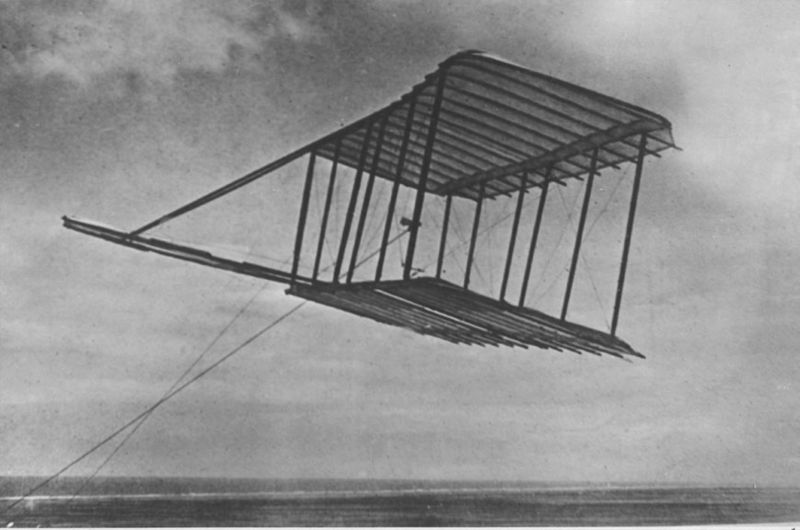
The story of the first powered airplane begins not on a runway, but on the dunes of Kitty Hawk with a kite. Wilbur and Orville Wright were obsessed with one problem: lateral control. How do you stop a flying machine from rolling uncontrollably? Their solution, which they called “wing warping”, was tested first on a biplane kite in 1899.
The kite responded precisely to their inputs, validating the wing-warping concept. Over the next two years, the brothers built and tested a series of progressively larger glider kites, each teaching them more about lift, drag, and control. Without those kite experiments, the flight at Kitty Hawk on December 17, 1903 – the first powered flight in human history – would not have been possible when it was.
How Kites Were Used as Military Technology
Long before radar, drones, and satellite reconnaissance, kites served as military technology across multiple civilizations. Japan flew kites fitted with bells and gongs over enemy camps at night, creating the impression of spirit attacks. Korean armies used signal kites to relay orders between units during medieval battles. European siege engineers flew kites to measure distances to enemy fortifications, calculating the range of their catapults.
In the early 20th century, British inventor Samuel Franklin Cody developed the Man Lifting Kite System, capable of raising a soldier into the air for aerial reconnaissance. Variants of this system were used by both sides during World War I. Kites had effectively become military hardware, more than a millennium before the first military drone.
KiteGen and the Future of Wind Energy from Kites
The newest chapter in the story of kites and science is happening right now. Italian researchers developed KiteGen, a system that uses large kites flying at high altitude (200 to 800 metres, where winds are stronger and more consistent than ground level) to drive rotary alternators and generate electricity.
High-altitude wind energy is estimated to be 100 times more abundant than ground-level wind energy. Kite-based energy generation requires far less material than conventional wind turbines, produces no visual obstruction at ground level, and can access wind resources that tower-mounted turbines cannot reach. The same object that Benjamin Franklin used to capture lightning from the sky is now being engineered to harvest wind energy from it.

Fly360 and the Engineering Tradition of Kites
At Fly360, every kite we design is an engineering problem first. Director Nisarg Shah, recipient of First Prize from Prime Minister Narendra Modi at the Gujarat International Kite Festival and of a formal Letter of Appreciation from President Dr. APJ Abdul Kalam for his Pushpak Space Shuttle kite design, treats kite fabrication with the precision of aerospace engineering.
Industrial ripstop nylon, carbon fibre composite spars, fiberglass reinforcements, and 3D-printed AutoCAD-designed connectors ensure every Fly360 kite performs precisely as engineered under real wind conditions. The science of kites never stopped progressing – and neither have we.
Frequently Asked Questions: Kites and Scientific Discoveries
Answers to the most common questions about this topic from Fly360.
What scientific experiment did Benjamin Franklin conduct with a kite?
How did the Wright Brothers use kites in their experiments?
What is KiteGen?
How were kites used in warfare historically?
Where can I learn more about kite science and aerodynamics?
Curious About the Science of Kites?
Fly360 brings kite engineering to life at workshops, festivals, and schools across India.