


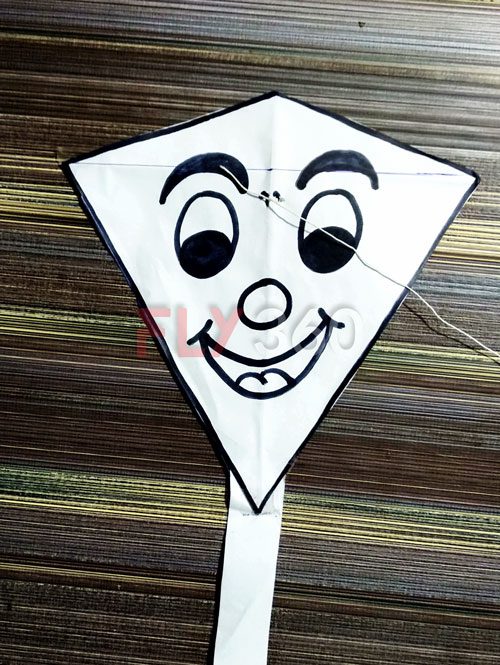
Kite Info
How to Make a Homemade Kite
Learn how to make a homemade kite from scratch with FLY360's step-by-step guide. Material specs, frame ratios, bridle setup & expert tips from India's top kite engineers.
There is a specific satisfaction that comes from flying something you built with your own hands. The kite climbs, the string goes taut, and every gust of wind that keeps it airborne is a real-time validation of the decisions you made at the workbench.
At FLY360, we have engineered kites that flew at the Gujarat International Kite Festival in front of the Prime Minister of India, kites that live in permanent museum collections in Washington D.C. and Istanbul, and kites that covered a 1.2-kilometer line during a Limca Book of Records attempt. But before any of that, the foundation of this craft is the same as it has always been: understanding why a kite flies.
This guide is for anyone who wants to build a functional, well-performing diamond kite at home using materials that are easy to source in India. We are not going to gloss over the structural logic. We will explain what each component does, why the dimensions matter, and what to adjust if the kite does not perform as expected on the first flight.
What Makes a Kite Fly: The Aerodynamic Basics
Before cutting a single piece of material, understand the three forces a kite must balance to sustain flight.
Lift is generated when wind pressure on the kite’s face pushes it upward and backward relative to the flier. The kite’s angle of attack (the angle its face presents to the oncoming wind) controls how much lift is produced. Too shallow and there is not enough pressure. Too steep and the kite stalls and falls.
Drag is the rearward force the wind exerts on the kite’s structure. The kite string connects this drag force to a fixed point on the ground, creating the tension that keeps the kite airborne. Without drag, there is nothing to anchor the lift.
Stability is controlled by the tail and the bridle. The bridle (the short string assembly that connects the flying line to the kite’s face) sets the angle of attack. The tail adds drag at the bottom of the kite, which keeps the nose pointing into the wind and prevents the kite from spinning or rolling.
Every design decision in this guide traces back to optimizing these three forces. This is the same engineering logic we apply to our commercial kite manufacturing at an industrial scale.
Materials You Will Need
For a standard diamond kite with a 90 cm spine, all materials are available at stationery shops, hardware stores, or online suppliers across India.
Frame:
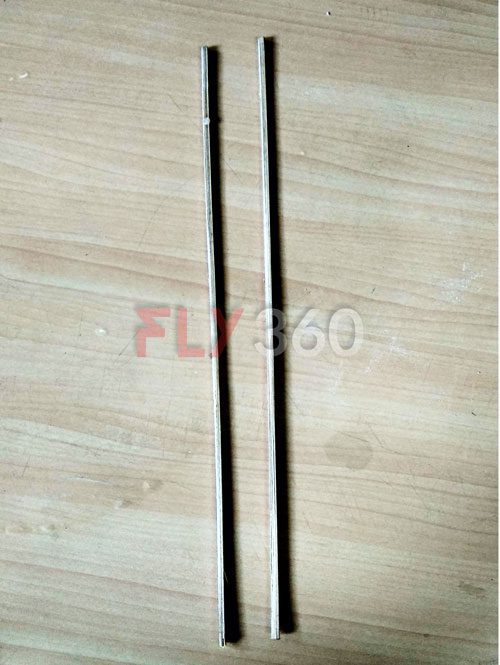
- Two wooden dowels or bamboo sticks: one at 90 cm (spine / vertical spar) and one at 70 cm (spreader / horizontal spar)
- Sandpaper (light grit) to smooth any rough ends
Sail:
- One sheet of lightweight plastic sheet, tissue paper, or thin ripstop fabric, approximately 80 cm x 80 cm. Plastic bags from packaging work well as a starting material. Ripstop nylon (available at fabric stores) produces a significantly more durable result.
Connectors and Reinforcement:
- Strong adhesive tape (clear packing tape or cloth tape)
- A craft knife or sharp scissors
- A small notch-cutting tool or sandpaper for the spar ends
Flying Line:
- At least 30 metres of strong cotton thread or kite line. Nylon thread is stronger and less prone to snap under gust loading.
Bridle and Tail:
- An additional 1.5 metres of line for the bridle
- Strips of light fabric or plastic ribbon, approximately 1.5 to 2 metres total, for the tail
Total material cost for a functional homemade diamond kite using basic materials: approximately Rs. 80 to Rs. 200.
For a look at how these material choices scale into our industrial production using ripstop nylon, fiberglass spars, and carbon fiber composites, visit our materials and manufacturing page.
Step-by-Step: How to Build a Diamond Kite
Step 1: Prepare the Frame
Take the 90 cm spine and the 70 cm spreader. Find the centre point of the spreader (35 cm from either end) and mark it. Measure 25 cm down from the top of the spine and mark this point. This is where the two spars will cross.
The cross-point sits at roughly 28% down from the top of the spine. This asymmetric placement is intentional: it shifts the kite’s centre of pressure forward, which improves stability in moderate winds.
At the crossing point, bind the two spars firmly together using strong tape or a figure-eight lashing with kite line. The joint must be tight with zero lateral movement. Any looseness here will cause the frame to flex asymmetrically under wind load and the kite will track sideways instead of climbing straight.
Cut a small V-shaped notch at each of the four spar ends. These notches will anchor the outline string that defines the kite’s perimeter.
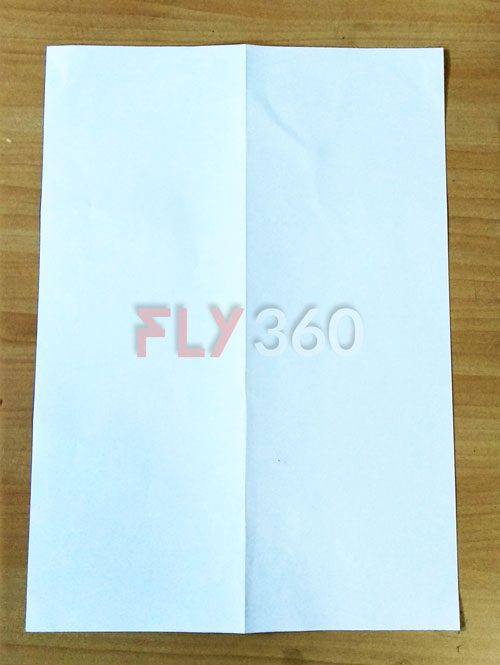
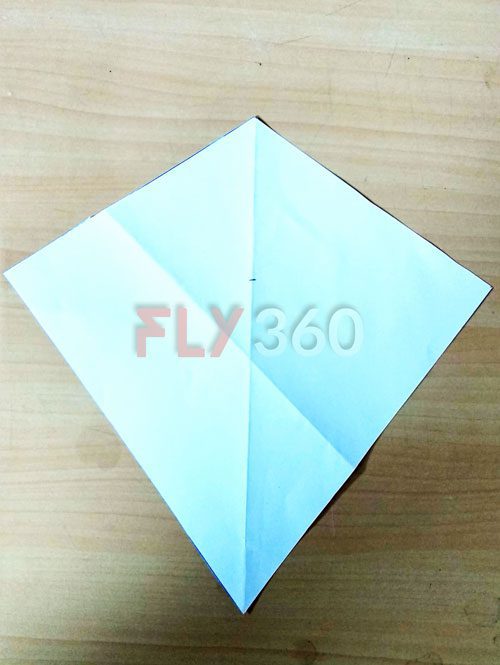
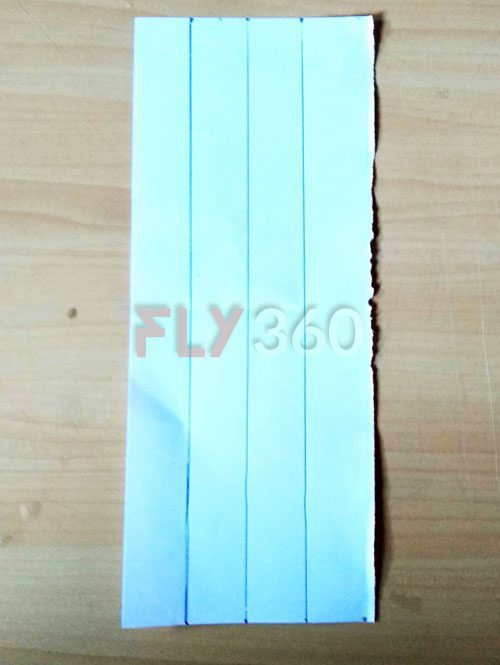
Step 2: String the Perimeter
Cut a length of strong line approximately 300 cm. Anchor it into the notch at the top tip of the spine, then pull it taut to the left spreader tip, across to the right spreader tip, down to the bottom tip of the spine, and back up to the top. Tie it off firmly.
As you pull the string around the frame, apply even, moderate tension. The perimeter line defines the kite’s shape and also bows the spreader slightly, giving the sail a gentle convex curve when viewed from the front. This curve creates a more effective lift surface than a completely flat sail.
Check that the frame is symmetric by measuring from the cross-point to each spreader tip. Both distances must be equal. If they differ by more than 5 mm, the kite will pull consistently to one side in flight.
Step 3: Cut the Sail
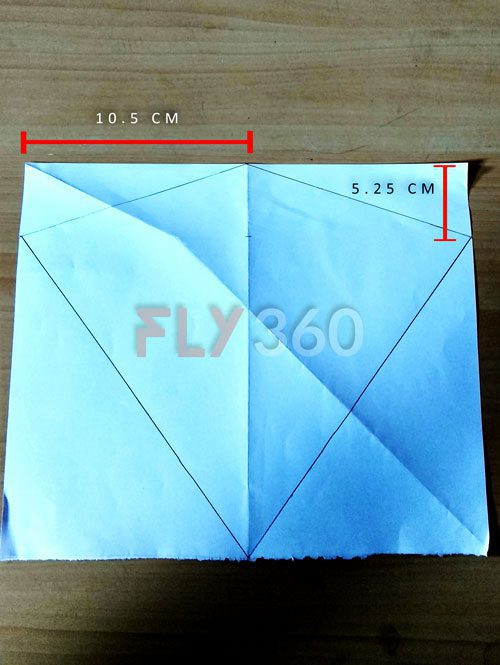
Lay the framed outline flat on your sail material. Trace around the perimeter string, then add a 3 cm border around the entire outline before cutting. This border will fold over the perimeter string to create a clean, reinforced edge.
Cut the sail cleanly. Ragged or uneven edges create localized turbulence along the kite’s margin, which reduces lift efficiency and creates noise in flight.
Lay the frame back onto the cut sail. Fold the border material over the perimeter string and tape it down firmly. Work from the corners inward, keeping the sail taut but not so tight that it distorts the frame geometry. The sail surface should be smooth and wrinkle-free when the frame is under slight tension.
Reinforce all four corner points with an additional patch of tape on both the front and back of the sail. These are the highest-stress areas during flight and any tear will begin here.
Step 4: Set the Bridle
The bridle is the single most important tuning element on the kite. It controls the angle of attack and therefore governs how the kite performs across different wind speeds.
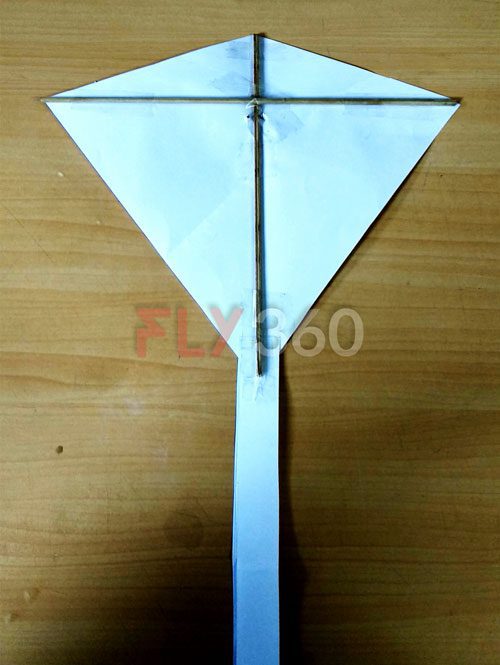
Cut a bridle line of approximately 100 cm. Attach one end to the top tip of the spine and the other end to the cross-point on the spine (where the two spars meet). Pull the bridle taut and find its midpoint. Tie a small loop at this midpoint using a slip knot. This is your tow-point, where the flying line attaches.
A starting bridle angle for moderate winds (approximately 15 to 25 km/h) is achieved when the tow-point loop sits at roughly 30 cm from the top attachment point along the bridle string. Hold the kite up by the tow-point. The kite’s face should tilt toward you at an angle of approximately 20 to 25 degrees from vertical.
If the kite dives nose-first: slide the tow-point loop slightly toward the top of the bridle (steepen the angle). If the kite stalls and falls backward: slide the loop toward the bottom of the bridle (flatten the angle).
This single adjustment resolves most flight problems in homemade kites.
Step 5: Attach the Tail
The tail provides drag stability at the base of the kite. For a 90 cm diamond kite, a starting tail length of 150 to 180 cm is appropriate in moderate wind. Attach it to the bottom tip of the spine.
In high wind, lengthen the tail for more stability. In light wind, shorten it or remove it entirely, since excess tail drag will prevent the kite from reaching flying altitude.
Tie the flying line to the tow-point loop using a secure non-slip knot. Do not use a simple overhand knot: it will tighten under load and become difficult to remove.
Flying Your Kite: First Launch Protocol
Find an open space at least 50 metres across, free from overhead power lines, trees, and buildings. Never fly near airports, restricted airspace, or during electrical storms.
Stand with your back to the wind. Hold the kite up by the bridle tow-point and let the wind take it. Do not run. If there is enough wind, the kite should rise with gentle line tension from your free hand as you let the string out in controlled increments.
If the kite spins: check that the frame is symmetric and the bridle tow-point is centred. If the kite loops and crashes repeatedly: add tail length. If the kite will not rise above 3 to 5 metres: reduce tail length or adjust the bridle tow-point upward.
Most first-flight issues resolve with one of these three adjustments.
Common Mistakes and How to Fix Them
The frame is not symmetric. This is the most frequent structural error. Measure every dimension before joining the spars. Asymmetry of as little as 1 cm at the spreader tips will cause consistent tracking in the wrong direction.
The sail is too heavy. Thick paper, dense fabric, or excessive tape adds weight that reduces the lift-to-weight ratio. Use the lightest material that still holds structural integrity in the wind range you are flying in.
The bridle is too short. A bridle that is shorter than the kite’s spine limits the range of tow-point adjustment available, making fine-tuning difficult. Always cut the bridle at least 10 cm longer than the spine.
Flying in the wrong wind. Diamond kites at this size perform best in winds between 12 and 30 km/h. Below 12 km/h, there is insufficient lift. Above 30 km/h, the structure experiences stress levels beyond what basic materials can sustain.
Upgrade Path: From Homemade to High-Performance
A successful homemade diamond kite is the foundation of a much deeper craft. Once you understand how the bridle, sail area, frame geometry, and tail interact, you can begin exploring designs with significantly higher performance ceilings.
Ripstop nylon over plastic or paper produces a sail that is 3 to 5 times more durable under repeated gust loading, holds its shape better across a wider wind range, and does not degrade in humidity.
Fiberglass spars over wooden dowels eliminate the risk of snap failure under high wind loads and reduce weight for a given stiffness, which directly improves the lift-to-weight ratio.
Delta kite geometry opens up a wider operating wind window than the diamond and requires no tail for stability, which reduces drag and allows higher altitude in lighter winds.
These are the same material upgrades that define FLY360’s commercial production line. To see where this path leads at full engineering scale, explore our full kite product range or read how we engineer 12×12-foot custom delta structures for branded aerial campaigns on our aerial branding page.
Kite Making as an Educational Activity
Kite making sits at the intersection of physics, engineering, and craft. At FLY360, we have run structured kite-making and aerodynamics workshops for groups across India. In one session, we conducted a kite-making and aerodynamic engineering workshop for 1,017 participants simultaneously in a single sitting, which earned us a place in the Limca Book of Records.
If you are looking to organise a kite-making workshop for a school, community group, corporate team-building session, or cultural event, our workshop and training services are specifically designed for high-participation formats at scale.
Alternatively, explore our educational kite kits available through the FLY360 store. Each kit includes pre-cut materials, dimensioned frame components, and a structured build guide, so every participant completes a functional, flyable kite within a single session.
Frequently Asked Questions: Homemade Kite Making
What is the best material for a homemade kite sail? For a first build, lightweight plastic sheet from packaging bags is the most accessible option. For a more durable result, thin ripstop nylon (available at fabric stores across India) significantly outperforms paper or plastic in wind resistance and longevity.
What is the correct frame ratio for a diamond kite? For a standard diamond kite, a spine-to-spreader ratio of approximately 9:7 (for example, 90 cm spine and 70 cm spreader) produces reliable performance in winds between 12 and 30 km/h. The spreader cross-point should sit at 25% to 30% down from the top of the spine.
Why does my homemade kite keep spinning and crashing? Spinning is almost always caused by frame asymmetry or an incorrectly positioned bridle tow-point. Check that both spreader-tip-to-cross-point distances are exactly equal, and slide the bridle tow-point upward (toward the top tip) in small increments until the kite tracks straight.
How long should the tail be on a diamond kite? Start at 150 cm to 180 cm for a 90 cm diamond kite in moderate wind. Add length if the kite is unstable or loops. Reduce length if the kite struggles to gain altitude in lighter winds.
Can I add LED lights to a homemade kite? Yes, but LED additions increase the kite’s all-up weight, which requires a corresponding increase in sail area or wind speed to maintain adequate lift. For a guide to engineered LED kite configurations, read our Diwali LED kite flying guide.
Where is the best place to fly a kite in India? Open ground away from power lines, trees, and buildings. Beaches, open parks, and agricultural fields with consistent onshore or open-country wind are ideal. Avoid flying near airports and always follow local airspace regulations. For large-scale event kite flying with airspace compliance, visit our event services page.
Does FLY360 sell ready-made kites for beginners? Yes. Our FLY360 online store stocks both beginner kite kits and professionally manufactured commercial kites across multiple formats and size categories.
Build It. Fly It. Understand It.
A homemade kite is not a craft project with a single outcome. It is a repeatable aerodynamic experiment. Every adjustment to the bridle, every change in tail length, every new material you substitute teaches you something precise and applicable about the physics of flight.
FLY360 was built on exactly this foundation. The same engineering principles that govern a 90 cm diamond kite made from bamboo and plastic govern a 12-foot delta kite fabricated from carbon fiber, ripstop nylon, and AutoCAD-designed connectors. The physics does not change at scale. Only the tolerances tighten.
Start here. Build one. Fly it. Adjust it until it performs exactly as it should.
When you are ready to take it further, explore everything FLY360 builds and delivers.
FLY360 is India’s leading commercial kite brand and aerial experiential agency, founded and operated from Vapi, Gujarat. We have produced over 1,00,000 custom-engineered kites, conducted kite-making workshops for 1,017 participants simultaneously in a single sitting, and delivered over 700 large-scale aerial events across 4 continents. Our work is recognised by the Prime Minister and President of India and held in permanent collections at the World Kite Museums in Washington D.C. and Istanbul.